
Which filter, battery, and card does the DJI Mavic Mini need?
The specification points at a filter, a battery and a card.
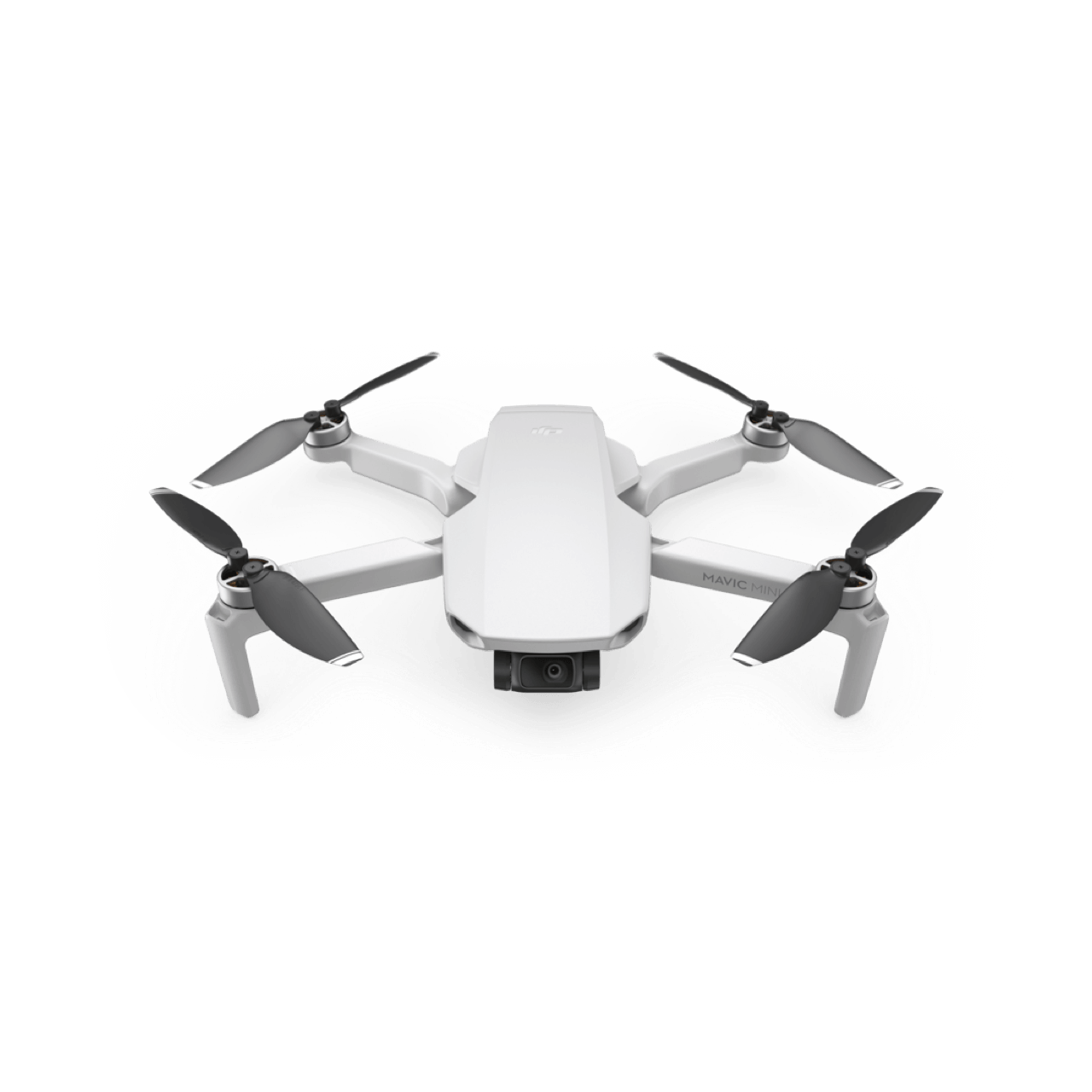
What to buy
This page carries affiliate links. A purchase pays this account a commission, at no extra cost to you.
Filter
An ND filter set made for the DJI Mavic Mini
The lens is fixed, so an ND filter is the only way to hold the shutter near 1/50 second in daylight. Buy the set cut for this model, because a filter for another one will not seat.
Battery
A DJI Mavic Mini Intelligent Flight Battery, 2400 mAh
One battery runs 30 minutes. A spare is the difference between one flight and a whole session.
Card
UHS-I Speed Class 3 or above is required. A list of reccomended microSD cards can be found below.
The DJI Mavic Mini carries no storage of its own. Without a card it records nothing at all.
Full specification
Every value DJI publishes for the DJI Mavic Mini, in the sections DJI groups them in.
Aircraft
- Takeoff Weight [1]
249 g
- Dimensions
Folded: 140×81×57 mm (L×W×H) Unfolded: 159×202×55 mm (L×W×H) Unfolded (with propellers): 245×289×55 mm (L×W×H)
- Diagonal Distance
213 mm
- Max Ascent Speed
4 m/s (S Mode) 2 m/s (P Mode) 1.5 m/s (C Mode)
- Max Descent Speed
3 m/s (S Mode) 1.8 m/s (P Mode) 1 m/s (C Mode)
- Max Speed (near sea level, no wind)
13 m/s (S Mode) 8 m/s (P Mode) 4 m/s (C Mode)
- Maximum Takeoff Altitude
3000 m
- Max Flight Time
30 minutes (measured while flying at 14 kph in windless conditions)
- Max Wind Speed Resistance
8 m/s (Scale 4)
- Max Pitch Angle
30° (S Mode) 20° (P Mode) 20° (C Mode)
- Max Angular Velocity
150°/s (S Mode) 130°/s (P Mode) 30°/s (C Mode)
- Operating Temperature Range
0° to 40°C (32° to 104°F)
- Operating Frequency[2]
Model MT1SS5: 5.725-5.850 GHz Model MT1SD25: 2.400-2.4835 GHz, 5.725-5.850 GHz
- Transmission Power (EIRP)
Model MT1SS5 5.8 GHz: <30 dBm (FCC); <28 dBm (SRRC) Model MT1SD25 2.4 GHz: <19 dBm (MIC/CE) 5.8 GHz: <14 dBm (CE)
- GNSS
GPS+GLONASS
- Hovering Accuracy Range
Vertical: ±0.1 m (with Vision Positioning), ±0.5 m (with GPS Positioning) Horizontal: ±0.3 m (with Vision Positioning), ±1.5 m (with GPS Positioning)
Gimbal
- Mechanical Range
Tilt: -110° to 35° Roll: -35° to 35° Pan: -20° to 20°
- Controllable Range
Tilt: -90° to 0° (default setting) -90° to +20° (extended)
- Stabilization
3-axis (tilt, roll, pan)
- Max Control Speed (tilt)
120°/s
- Angular Vibration Range
±0.01°
Sensing System
- Downward
Operating Range: 0.5-10 m
- Operating Environment
Non-reflective, discernable surfaces Diffuse reflectivity (>20%) Adequate lighting (lux>15)
Camera
- Sensor
1/2.3” CMOS Effective Pixels: 12 MP
- Lens
FOV: 83° 35 mm Format Equivalent: 24 mm Aperture: f/2.8 Shooting Range: 1 m to ∞
- ISO Range
Video: 100-3200 (Auto)100-3200 (Manual) Photo: 100-1600 (Auto) 100-3200 (Manual)
- Shutter Speed
Electronic Shutter: 4-1/8000s
- Still Image Size
4:3: 4000×3000 16:9: 4000×2250
- Still Photography Modes
Single shot Interval: 2/3/5/7/10/15/20/30/60 s
- Video Resolution
2.7K:2720×1530 24/25/30 pFHD:1920×1080 24/25/30/48/50/60 p
- Max Video Bitrate
40 Mbps
- Supported File System
FAT32(≤32 GB) exFAT(>32 GB)
- Photo Format
JPEG
- Video Format
MP4 (H.264/MPEG-4 AVC)
Remote Controller & Video Transmission
- Operating Frequency
Model MR1SS5: 5.725-5.850 GHz Model MR1SD25: 2.400-2.4835 GHz, 5.725-5.850 GHz
- Max Transmission Distance (unobstructed, free of interference)
Model MR1SS5 5.8 GHz: 4000 m (FCC); 2500 m (SRRC) Model MR1SD25 2.4 GHz: 2000 m (MIC/CE) 5.8 GHz: 500 m (CE)
- Operating Temperature Range
0° to 40°C (32° to 104°F)
- Transmission Power (EIRP)
Model MR1SS5 5.8 GHz: <30 dBm (FCC); <28 dBm (SRRC) Model MR1SD25 2.4 GHz: <19 dBm (MIC/CE) 5.8 GHz: <14 dBm (CE)
- Battery Capacity
2600 mAh
- Operating Current/Voltage
1200 mA 3.6 V (Android) 450 mA 3.6 V (iOS)
- Supported Mobile Device Size
Max length: 160 mm Max thickness: 6.5-8.5 mm
- Supported USB Port Types
Lightning, Micro USB (Type-B), USB Type-C
- Video Transmission System
Enhanced Wi-Fi
- Live View Quality
720p/30fps
- Max. Bitrate
4 Mbps
- Latency (depending on environmental conditions and mobile device)
170-240 ms
Charger
- Input
100-240 V, 50/60 Hz, 0.5A
- Output
12V 1.5 A / 9V 2A / 5V 3A
- Rated Power
18 W
Intelligent Flight Battery
- Capacity
2400 mAh
- Voltage
7.2 V
- Max Charging Voltage
8.4 V
- Battery Type
Li-ion 2S
- Energy
17.28 Wh
- Net Weight
100 g
- Charging Temperature Range
5° to 40°C (41° to 104°F)
- Max Charging Power
24 W
Intelligent Flight Battery (1100 mAh)
- Capacity
1100 mAh
- Voltage
7.6 V
- Max Charging Voltage
8.7 V
- Battery Type
LiPo 2S
- Energy
8.36 Wh
- Net Weight
50 g
- Charging Temperature Range
5° to 40°C (41° to 104°F)
- Max Charging Power
18 W
APP
- Name
DJI Fly
- Required Operating System
iOS v10.0 or later Android v6.0 or later
Supported SD Cards
- Supported SD Cards
UHS-I Speed Class 3 or above is required. A list of reccomended microSD cards can be found below.
- Recommended microSD Cards
16 GB: SanDisk Extreme, Lexar 633x 32 GB: Samsung Pro Endurance, Samsung Evo Plus, SanDisk Industrial, Sandisk Extreme V30 A1, SanDisk Extreme V30 A2, SanDisk Extreme Pro V30 A1, SanDisk Extreme Pro V30 A2, Lexar 633x, Lexar 667x 64 GB: Samsung Pro Endurance, Samsung Evo Plus, SanDisk Extreme V30 A2, Lexar 633x, Lexar 667x, Lexar 1000x, Lexar High Endurance, Toshiba EXCERIA M303 V30 A1, Netac Pro V30 A1 128 GB: Samsung Evo Plus, SanDisk Extreme V30 A2, SanDisk Extreme Plus V30 A1, SanDisk Extreme Plus V30 A2, Lexar 633x, Lexar 667x, Lexar 1000x, Lexar High Endurance, Toshiba EXCERIA M303 V30 A1, Netac Pro V30 A1 256 GB: SanDisk Extreme V30 A2
Footnotes
- Footnotes
1. Aircraft takeoff weight (includes battery, propellers, and a microSD card). Registration not required in some countries and regions. Check local rules and regulations before use.These specs have been determined through tests conducted with the latest firmware. Firmware updates can enhance performance, so updating to the latest firmware is highly recommended.2. Due to local policy and regulation restrictions, the 5.8 GHz frequency band is currently banned in certain countries, including but not limited to Japan, Russia, Israel, Ukraine, and Kazakhstan. Please use the 2.4 GHz frequency band when operating in these locations. Always check local rules and regulations before use, as they may change over time.
The rest of the family
Shot on this one?
Send the frame you are proud of. A person reads every one, and your handle goes in the caption.